How to Trade Stocks Online in Canada
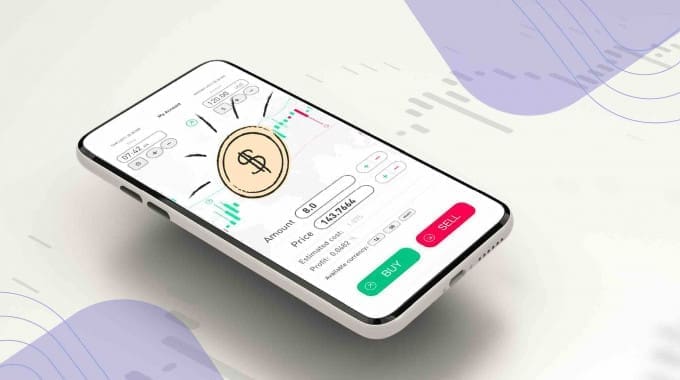
You’ve probably seen the images of online traders with their multiple computer monitors displaying endless reams of financial data. Online trading doesn’t have to be that complicated. Today’s online trading services are user-friendly and as easy to use as any other type of online banking platform. In fact, many young investors are using mobile apps for their stock trading. A stock trade can be done in a few clicks on your phone.
The leading online brokers in Canada are Wealthsimple and Questrade. Wealthsimple has soared in popularity thanks to its no-commission trading, while Questrade charges fees that start at a penny per share. In that scenario, you would pay one dollar for every 100 shares you buy or sell. For comparison, banks typically charge a flat fee of around $10 per trade.
Another major difference between Wealthsimple and Questrade is that Wealthsimple requires a minimum of $1,000 in savings to open a brokerage account and start trading. Wealthsimple, meanwhile, has no such restrictions, which should appeal to new investors with limited capital.
These brokers also offer more passive investing options, meaning you don’t need to spend all your time researching companies and trading stocks. That can be too much commitment for some. A “robo-advisor” is a term used to describe a process where you essentially let a computer invest for you.
The computer, or robo-advisor, uses algorithms to find high-performing ETFs and other securities that bring you a positive rate of return over time. It’s an option for those with a “set it and forget it” mentality in stock market investing.

How to Trade Canadian Stocks
The TSX and Canadian Securities Exchange are the main stock exchanges in Canada. The TSX, which stands for Toronto Stock Exchange, is the biggest, and you can find most Canadian public companies listed either on the main exchange or the TSX Venture Exchange for “junior” public companies. A public company is one you can buy shares in. However,r there are also exchanges in different countries such as the New York Stock Exchange and the London Stock Exchange.
Trading Canadian stocks merely requires signing up for a trading platform, either through a bank or an online broker. Opening an account requires details like your home address and social insurance number. It’s an easy process – similar to signing up for any other kind of online account.
Investing in the Canadian stock market will depend on your interests, research, and which sectors you feel confident will perform over time.
Here are the most frequently traded sectors on the TSX:
- Financial companies like banks, credit unions, and mutual fund companies (36%)
- Energy sector companies like oil & gas extraction (20%)
- Material companies like mining and forestry (10%)
- Industrial companies like construction, engineering, and transportation infrastructure (8%)
- Consumer Discretionary, Telecom, Healthcare, IT, Consumer Staples, and Utilities round out the rest (26%)
Smaller public companies will list on the Canadian Securities Exchange (CSE). The TSX, TSX-V, and the CSE should all be available for trading through the broker of your choice. However, trading US stocks is a bit different. The US Securities and Exchange Commission governs it and involves currency conversion fees.
Settlement Period for Canadian Stock Trades
For Canadian stock trades on the Toronto Stock Exchange, the settlement period is T+1. This means that the transactions are finalized one business day after the stock trade is made.
Best Time of Day to Buy Stocks in Canada
When buying stocks in Canada, the best time is usually between 11:30 am and 2:00 pm Eastern Time. Another good time is the final hour of trading, 3:00 pm – 4:00 pm Eastern Time. This ensures liquidity while avoiding the volatility of the morning market.
How to Pick the Best Stocks to Buy
Picking the right stocks to begin your investment portfolio will depend on many different factors, such as the price of the shares, past performance (which does not always predict future profits), whether the company aligns with your values, and whether you believe in the long-term profitability of the company.
The best advice for new investors is to make sure you are diversified. In other words, don’t put all your stock picks in one basket. Spread out your portfolio so that in the case of a downturn in one sector or an underperforming company, your portfolio doesn’t get overly impacted. This is called reducing your risk exposure.
By nature, stocks are volatile and come with risk. Companies and financial institutions can falter, and geopolitical events can impact economies; the reasons for stocks to nosedive are plenty and beyond your control. So your best defence against risk and uncertainty is a diversified portfolio with investments in multiple sectors. As the saying goes, a smart investor is a diversified investor.
In the unlikely event that an investment broker folds, there is the Canadian Investor Protection Fund (CIPF), which aims to recover property, such as shares and cash, if such a scenario occurs.
Another risk-reducing investment strategy is to invest in low-cost ETFs, both domestic and international. ETFs (exchange-traded funds) are baskets of multiple stocks – sometimes hundreds – so the fund won’t be significantly affected by any one underperforming stock.
An example would be buying a tech-focused ETF that holds shares in multiple tech companies, such as Facebook (Meta), Tesla, Apple, Google, and Netflix. If Netflix falters, the ETF will take a smaller hit than an investor who owns only Netflix shares. ETFs, unlike mutual funds, can be purchased on stock exchanges.
How to Buy Stocks Without a Broker in Canada
You do have options if you’re uncomfortable with opening an investment account via a bank or an online broker. If you want to buy stocks without a broker, some companies offer what’s called a Direct Stock Purchase Plan (DSPP). A DSPP allows you to buy shares directly from a company without the assistance of a broker.
Some benefits of a DSPP include discounts on share prices or lower transaction fees. There is often a minimum deposit of $100 to $500 to get started. However, these plans usually involve monthly, automated payments to buy more shares over the long term. You need to be committed to the company for such a regular investment. DSPPs are a common workplace compensation benefit, so if you work for a public company, check with your payroll admin to see if they are available.
Examples of companies that offer DSPPs include Walmart, Coca-Cola, Starbucks, and Home Depot. Many of these companies use what’s called a transfer agent, which acts as a middleman between the investor and the company. These agents, such as Computershare, usually charge very low fees for their service.
A big downside to buying stocks through DSPPs is the limited choice. With banks and online brokers making stock buying increasingly accessible, more and more companies have dropped their DSPP programs. It is not advisable to invest in a company just because they offer a DSPP that will save you on broker fees. You should invest because you believe in the company and have done your due diligence on its financial outlook.
Online Stock Trading in Canada for Beginners
Your first step to online stock trading will be opening an investing account with either a bank or an online broker. It should only take about 10 minutes to provide some personal details and accept the terms and conditions.
You will then need to transfer money from your bank account to the investing account, usually via an EFT (electronic funds transfer). If your new investing account is with your pre-existing bank, the transfer should be quick and seamless from your chequing or savings account. If you are transferring money from a registered account, such as an RRSP or TFSA, the process becomes more complicated.
Once you have your online trading account set up, you will see the option to buy and sell stocks online on the user interface. Here’s a quick, basic user guide to buying stock online. Keep in mind that online investing accounts will all look a little different.
- Select Buy Stock and enter the symbol of the company you want to buy shares in. You can use Google or Yahoo! Finance to find the company’s symbol.
- Choose whether the stock is traded on a Canadian or a US market.
- Input how many shares you want to purchase. Make sure you have enough funds to cover the order cost, including any transaction fees.
- Select a market price or a limit price you are willing to pay. Market price is the current market price of the share. A limit price is the maximum amount you are willing to buy the share during the trading session (an order will be triggered if the share hits your price during a trading session).
- Confirm your order and wait for a notification that your order has been filled. If there is a problem with your order, it will go unfilled, and you may receive a notification.
And speaking of TFSAs, the tax-free savings account is a great vehicle for buying stocks. By trading with a TFSA account, you can avoid getting taxed on your capital gains.
Many online brokerages offer commission-free trading, as well as margin accounts and margin loans. You can also see ex-dividend dates, and more, to help you determine how much risk you would like to take. You can then see historical information that many use to choose a stock. However, by how stocks work, you could still lose money, or they could pay interest. This is also part of the reason why stocks are so popular.
Wash Sale Rules in Canada
The wash sale rule is also known as the superficial loss rule. When it comes to the Superficial Loss Rules through the Canada Revenue Agency, a loss is disallowed if you or an affiliated person buys the same property within 30 days of the sale. You’re unable to claim this capital loss on your taxes to offset capital gains.
Limit Order Vs Stop Loss Vs Stop Limit Orders
A limit order is an order to buy or sell a stock at a specific price or better. For the sell limit, you set a price below the current market value, and it will only execute if the stock drops to that price or lower. For the sell limit, you set a price above the current market value and it will only execute if the stock rises to that price or higher.
On the other hand, a stop-loss order is an order to buy or sell a security when it reaches a specified price, known as the stop price. A stop limit order, however, is a hybrid order that requires you to set two prices: the stop price, which is the trigger and the limit price, which is the price you’re willing to accept.
Bid, Ask and Spread: How They Work
In Canadian markets, the bid, ask, and spread are the backbone of the market. This represents the difference between the highest price a buyer is willing to pay and the lowest price a seller is willing to accept.
The Bid: The highest price a buyer is willing to pay.
The Ask: This is the lowest price a buyer is willing to accept.
The Spread: The difference between the bid and the ask price.
Day Trading Rules and Pattern Day Trading Status in Canada
When it comes to brokerage platforms in Canada (online trading and investing platforms), there are no pattern day trading restrictions on accounts. However, there are Canada Revenue Agency tax classifications, and you have to adhere to the superficial loss rule.
Pattern Day Trading Status restricts traders with under $25,000 USD from making more than 3 day trades in a rolling 5-day period. This is a US thing, though, and doesn’t apply to Canadian self-directed accounts on Canadian exchanges and platforms like Interactive Brokers. However, it does apply if you day trade US stocks while using a Canadian branch of an American broker.
The Canada Revenue Agency makes day trading rules in Canada that affect how you pay taxes. Your trading commissions are either considered investment income or business income based on how you trade, which will impact your total tax situation. General investments made occasionally are treated as investment income, while consistent trading is considered business income.
Margin Accounts Vs Cash Accounts
When it comes to creating long-term wealth, it’s important to research stocks as well as how to invest in them. The most common types of accounts are cash accounts and margin accounts. Here’s how they work.
Cash Accounts: For this type of account, all transactions are made with cash. When you sell a stock, you must wait 1 to 2 business days for those funds to fully settle before using them again. It has a much lower risk because you can’t lose more money than you deposit.
Margin Accounts: These accounts allow you to use your existing cash and securities as collateral to borrow money from the broker. This provides instant buying power and allows you to bypass settlement periods. That said, margin accounts aren’t available for all types of stocks. Penny stocks sold over the counter cannot be used for short selling in margin accounts. A ticker symbol for the company name is needed, even if you just want to use a single stock. Initial Public Offerings cannot be used for margin accounts.
Holding US Stocks in RRSPs
When it comes to investment advice to help your financial situation, holding US stocks in RRSPs is a great tax-efficient strategy. By doing this, you bypass the 15% US withholding tax on dividend income. You can do this because of the Canada-US tax treaty. Any capital gains that you earn are then grown tax-free within the account.
Dollar-Cost Averaging Vs. Lump-Sum Investing in Canada
When it comes to choosing between dollar-cost averaging vs. lump-sum investing, lump-sum investing has historically yielded higher returns. It’s the best option for long-term investors, those contributing smaller periodic paycheques and those who have a tolerance for short-term market volatility.
Dollar-cost averaging is when you invest a large sum of cash in smaller, fixed installments over a set period. You can miss out on potential market gains, though, since they can be sitting in cash awaiting deployment. That said, they are a great option for large windfalls or investors who are highly risk-averse.
Norbert’s Gambit: Avoiding Currency Conversion Fees
With Norbert’s Gambit, Canadian investors can avoid the standard 1.5%- 2.5% currency conversion fees charged by banks. This is done by utilizing interlisted securities. How it works is you purchase one dual currency asset, which is one currency, and then sell the shares for the same security in the other currency. You bypass currency conversion fees, and all you pay is the standard trading commission.
Stock Splits, Mergers, and What Happens to Your Shares
With both stock splits and mergers, your share quantities and values are adjusted, but the total dollar amount of your investment never changes. The maximum price of a share, payout ratio, or account minimums can change if you want to invest more, but your principal investment amount is never affected.sh flow.